The White Lady of Brandberg is Namibia’s most famous prehistoric rock painting and a defining example of ancient San rock art. The painting is hidden beneath a granite overhang at the Maack Shelter on Namibia’s highest mountain, the Brandberg massif, in north-western Namibia. For more than a century, it has fascinated archaeologists, historians and travellers.
Created between 2,000 and 4,000 years ago, the painting gained worldwide attention after early researchers mistakenly believed it depicted a woman of Mediterranean origin. Today, the White Lady rock painting in Namibia attracts visitors from around the world.
This guide explains the history of the White Lady, the archaeological debate surrounding its name, how to visit the site, what to expect on the hike, and why Brandberg Mountain remains one of Namibia’s richest sites for rock art and geology.
The White Lady: What Is It?
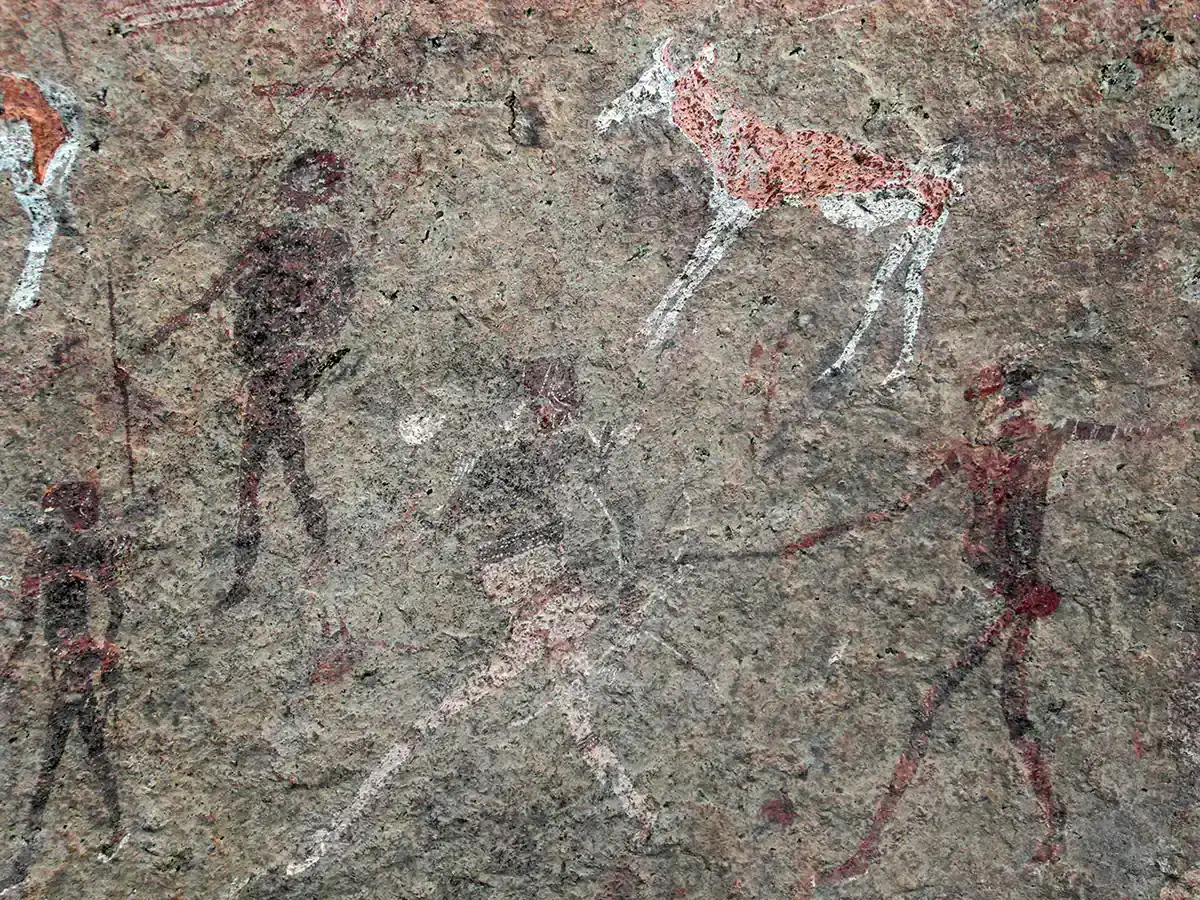
The White Lady is the most well-known figure within a larger prehistoric rock art panel at Maack Shelter on Brandberg Mountain. Created by San hunter-gatherers, the painting forms part of one of the largest concentrations of ancient rock art in southern Africa.
Rather than depicting a single person, the panel portrays a group of human figures and animals, including oryx, arranged in what is widely believed to represent a ceremonial or spiritual scene. The central figure, distinguished by its white-coloured limbs and detailed appearance, gave rise to the name “White Lady”.
It provides a remarkable insight into the artistic traditions, spiritual beliefs and way of life of the San people who inhabited this region thousands of years ago. Its archaeological importance is matched by the dramatic setting of Brandberg Mountain. Together, they make it a cornerstone of Namibia’s San rock art heritage — and a site now carefully protected through restricted, guided-only access.
Is the White Lady Actually a Woman?
For decades, the White Lady of Brandberg was at the centre of one of southern Africa’s most debated archaeological controversies — one that says as much about colonial attitudes as it does about ancient rock art.
The painting was first documented in 1917 by German explorer and topographer Reinhard Maack, who described the central figure as “a warrior” and noted what he called the “Egyptian-Mediterranean style” of the figures. His notes later came to the attention of prominent French archaeologist Abbé Henri Breuil, who studied them at the University of the Witwatersrand in Johannesburg in 1929 and began proposing that the figures had Mediterranean or Cretan origins. Breuil finally visited the Brandberg in person in 1947, copying the paintings and cementing the name “White Lady” — claiming the central figure was a young Cretan bull-leaper or an Egyptian princess. He published his full theories in his 1955 book, The White Lady of the Brandberg.
Breuil’s interpretation was not simply an archaeological error — it was rooted in the colonial assumption that indigenous African communities were incapable of producing sophisticated works of art. His theories were actively backed and sponsored by the South African government, which used this rhetoric to support its colonial and segregationist agenda. By attributing the paintings to Mediterranean outsiders, Breuil’s theory served to deny the San people their own rich cultural and historical achievements.
Breuil’s methods also caused lasting damage to the site itself. In his rush to document the paintings, his team wetted the fragile rock surfaces and outlined images with charcoal — severely contaminating the site and making modern radiocarbon dating of the paintings impossible.
Modern archaeological research has comprehensively rejected Breuil’s theory. The painting is now universally accepted as the work of San hunter-gatherers who inhabited north-western Namibia between 2,000 and 4,000 years ago. The central figure is not a woman — it is widely accepted to be a male San shaman or medicine man. The white colouring of the limbs represents ceremonial body paint used during ritual trance dances, not Mediterranean dress or foreign origin. The object Breuil interpreted as a lotus flower is now generally believed to be a hunting bow or similar equipment, though some researchers suggest it may represent a ritual fly-whisk or wand used in trance ceremonies.
The name “White Lady” has endured despite the controversy — a lasting reminder of a deeply flawed interpretation that has long since been set aside by the archaeological community.

About Brandberg Mountain: Namibia’s Highest Peak
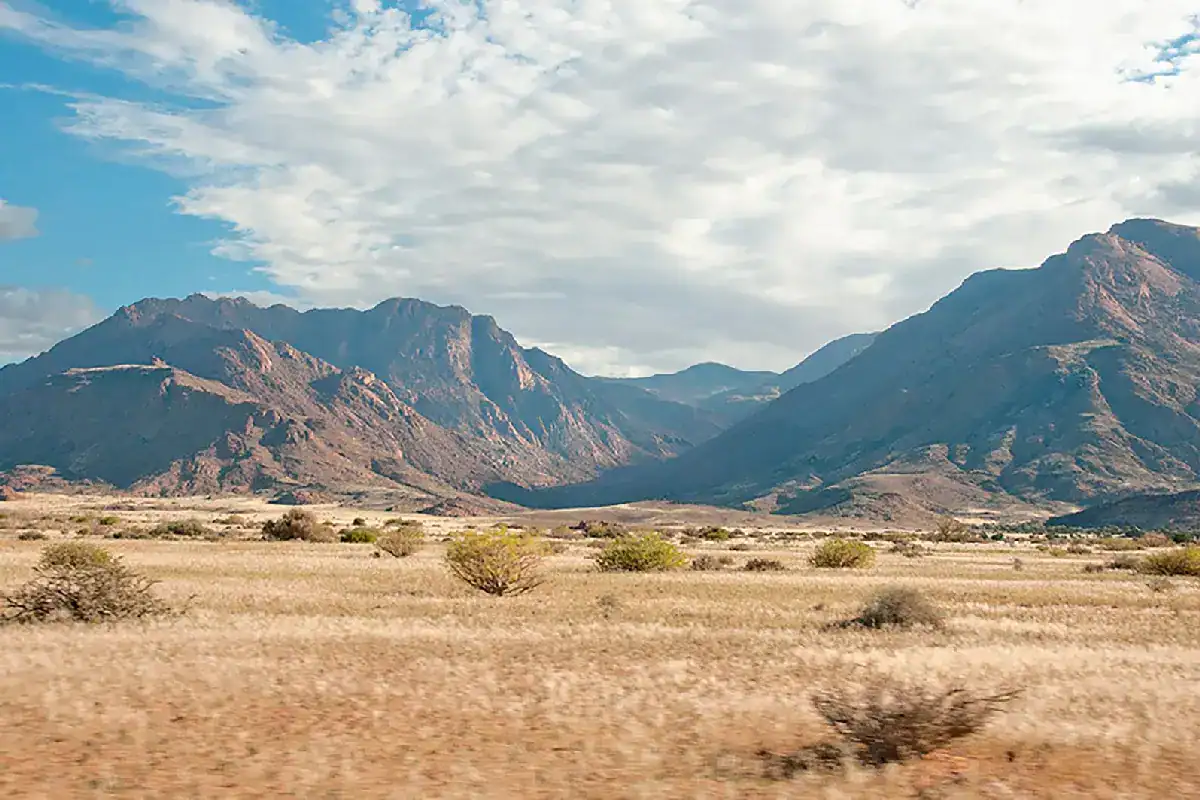
Brandberg Mountain is Namibia’s highest peak, rising to 2,573 metres above sea level at its summit, the Königstein — German for ‘King’s Stone’. Located in the Erongo Region and widely considered part of Damaraland, the mountain dominates the surrounding landscape and can be seen from a great distance on a clear day. It covers an area of approximately 650 km², stretching 30 km in length and 23 km in width. Of this, a core area of 450 km² was declared a National Monument in 1951.
The mountain is known by three names reflecting its cultural significance. The Afrikaans name Brandberg — meaning “Burning Mountain” — refers to the fiery red and orange glow that illuminates the granite massif at sunset. The Damara name Dâures carries the same meaning, while the Herero name Omukuruvaro translates to “Mountain of the Gods.”
Beyond the White Lady, Brandberg’s rock art is remarkably dense — rarely matched anywhere else on the continent. More than 1,000 rock shelters have been recorded across the massif, containing an estimated 45,000 individual rock paintings created by San hunter-gatherers. Most of these paintings were documented by researcher Harald Pager between 1977 and 1985. He traced and recorded over 43,000 individual figures across 840 sites. His work was posthumously published in a six-volume series titled Rock Paintings of the Upper Brandberg.
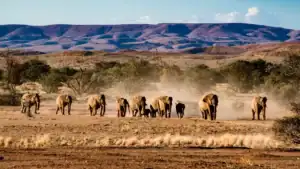
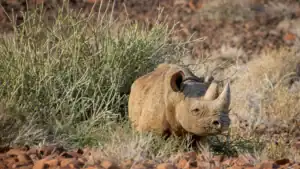
Despite its arid environment, where summer temperatures regularly exceed 40°C, Brandberg supports a surprising diversity of wildlife including desert-adapted elephants, klipspringers and baboons.
How to Visit: The Hike to Maack Shelter
Visiting the White Lady is about far more than simply viewing an ancient rock painting. The hike through the Tsisab Gorge is an important part of the experience, leading visitors past towering granite boulders and dry riverbeds before reaching the rock art panel.
The guided return walk ends at Maack Shelter, home of the White Lady rock painting. It covers approximately 4 kilometres, and most visitors complete the hike in about 90 minutes to two hours, depending on the pace of the group and the time spent at the site.
Access to the White Lady is only permitted with an official local guide, who helps protect this fragile archaeological site while sharing fascinating insights into the history of the White Lady, the geology of Brandberg and the surrounding landscape. Many visitors consider the guide’s knowledge to be one of the highlights of the experience.
The trail is not technically difficult, but the terrain involves uneven boulder fields and polished granite in the dry Tsisab riverbed — there are no ropes or ladders but careful footing is required. The Brandberg area is hyper-arid and temperatures can soar, making heat and dehydration the primary challenge rather than the distance itself. Sturdy walking shoes, at least two litres of water per person, sunscreen and a hat are essential. Start as early as possible — temperatures rise quickly and the exposed riverbed offers very little shade.
An entrance fee is charged at the Brandberg trailhead, which is open daily from 08:00 to 17:00 with a final entry time of 16:00 to allow enough time to complete the guided walk before closing. No advance booking is required, and a guide will be assigned on arrival. Fees are subject to change — contact the site directly or ask your lodge for the most current rates before visiting.
The Brandberg White Lady hike ends deep within Maack Shelter.

Where to Stay Near Brandberg
The closest accommodation to the White Lady Rock Painting is Brandberg White Lady Lodge, situated at the foot of Brandberg Mountain and offering direct access to the site and the surrounding wilderness. The nearby town of Uis, approximately 36 km from the White Lady, offers a range of accommodation options from guesthouses to campsites — making it a convenient alternative base for exploring Brandberg and the broader Damaraland region.
Browse our Damaraland accommodation near Brandberg to find the right option for your visit.
Booking accommodation in advance is strongly recommended, particularly during peak season from mid-July to mid-November.
Getting There
The Brandberg Mountain is situated approximately 36 kilometres northwest of the small mining town of Uis in Namibia’s Damaraland, and about 90 kilometres inland from the Atlantic coastline. A 4×4 is recommended for the gravel roads leading to the White Lady and for your self-drive tour.
Its location makes Brandberg an easy addition to many self-drive and guided tours through Damaraland. Visitors often combine Brandberg with nearby attractions such as Twyfelfontein World Heritage Site, Spitzkoppe, the Petrified Forest and Etosha National Park.
From Swakopmund (approximately 230 to 250 km — 2.5 to 4 hours)
Drive north on the B2 highway towards Henties Bay, then turn onto the C35 heading north through Henties Bay to Uis. From Uis, continue north on the C35 for approximately 14 km before turning west onto the D2359 gravel road. Follow the signs for the White Lady rock painting and Tsisab Gorge.
From Windhoek (approximately 320 km — 3.5 to 4.5 hours)
Head north on the B1 towards Okahandja, then turn west onto the B2 towards Karibib and Usakos, continuing north on the C35 through Uis to the Brandberg trailhead.
Approximate driving distances to the White Lady:
- Uis: 36 km
- Swakopmund: approximately 230 to 250 km
- Khorixas: 132 km
- Twyfelfontein: approximately 150 to 180 km
- Spitzkoppe: 127 km
- Etosha National Park (Andersson Gate): approximately 350 to 380 km
- Windhoek: approximately 320 km