Damaraland accommodation ranges from luxury tented camps deep in the Palmwag Concession to self-drive campsites near Twyfelfontein. Where you stay in this vast wilderness region determines what you see, how much you drive, and how much you spend. This guide covers accommodation in Damaraland across all main areas of the region, with clear guidance on which area suits which itinerary.
For a broader overview of the region including wildlife, rock art, and itinerary planning, see our complete Damaraland travel guide.
All lodges, camps, and campsites listed below are BookNamibia clients and can be enquired and booked directly through our platform — no booking fees, no commission.
Where to Stay in Damaraland: Choosing your Accommodation Area
Damaraland covers a vast area of north-western Namibia. Most self-drive travellers base themselves in two or three different locations across a 3–5 day itinerary. These are the main base areas, each with a distinct character, set of attractions, and access requirements:
- The Twyfelfontein Area — rock art, desert elephants, widest choice of accommodation
- The Palmwag Concession Area — rhino tracking, remote wilderness, serious safari
- The Grootberg Area — community lodges, plateau views, desert elephant corridor
- The Brandberg & Uis Area — White Lady hike, Ugab River elephants, closest to Swakopmund
- The Vingerklip & Ugab Terraces Area – scenic stopovers, the Vingerklip rock pillar, Etosha–Damaraland stopover
Damaraland Accommodation Price Guide
Prices below are approximate guide figures per person per night in high season (July–October). Rates vary by property and season — confirm current rates when enquiring.
| Accommodation Type | Price per night (approx.) | What's typically included |
|---|---|---|
| Campsite | N$300 – N$600 per site | Ablutions, braai area, power point. Some sites give access to lodge facilities. |
| Budget guesthouse / B&B | N$800 – N$1,500 per person | En-suite room, breakfast sometimes included. |
| Mid-range lodge (DBB) | N$2,500 – N$7,000 per person | Dinner, bed and breakfast. Pool, restaurant, guided activities. |
| Luxury lodge / camp | N$8,000+ per person | All-inclusive or DBB, guided activities daily, remote locations. |
Damaraland Accommodation by Area
Browse accommodation by geographic area below. Each area card describes the landscape, wildlife, access requirements, and the type of traveller it suits best. All client listings for that area appear as image tiles beneath the area card.
The Twyfelfontein Area
Best for: rock art, desert elephants, first-time visitors
UNESCO rock engravings on the doorstep
Desert elephants along the Aba Huab River
Organ Pipes, Burnt Mountain & Living Museum nearby
Petrified Forest 45km west
The area around Twyfelfontein is the most popular base in Damaraland and the natural starting point for first-time visitors to the region. The Twyfelfontein rock engravings — Africa’s largest concentration of rock petroglyphs and Namibia’s first UNESCO World Heritage Site — are a short drive from most properties here.
The Aba Huab River corridor is one of the most reliable desert elephant viewing areas in Damaraland, and sightings from lodge grounds are not uncommon. The Damara Living Museum is 10km north of Twyfelfontein, and the Petrified Forest is approximately 45km west on the C39.
A 4×4 vehicle is recommended for reaching this area via the D2612. Accommodation ranges from luxury lodges to campsites, suiting every budget. Browse Twyfelfontein area accommodation below.
The Palmwag Concession Area
Best for: rhino tracking, remote wilderness, serious safari
World's largest population of desert-adapted black rhino
Rhino tracking on foot with Save the Rhino Trust
Prime desert elephant territory
582,000 hectares of pristine wilderness
4x4 recommended; fly-in access available
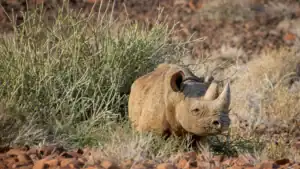
The Palmwag Concession is the remote heart of Damaraland — 582,000 hectares of ancient Namibian basalt where the largest population of free-roaming desert-adapted black rhino anywhere on earth is found. Save the Rhino Trust has operated community-based black rhino tracking in Palmwag since 1982, and a portion of every tracking fee goes directly to the local conservancies.
Desert elephants move through the dry riverbeds year-round alongside giraffe, Hartmann’s mountain zebra, oryx, and springbok. A 4×4 is strongly recommended for exploring the concession; fly-in access is available for those arriving by light aircraft. Minimum two nights recommended. Browse Palmwag Concession accommodation below.
The Grootberg Area
Best for: desert elephants, community lodges, scenic routes
Key desert elephant movement corridor
Community-owned lodges on the Grootberg escarpment
Spectacular plateau views over the Klip River Valley
A natural overnight stop for travellers heading from Twyfelfontein via Palmwag to Etosha.
4x4 recommended for all properties
The Huab River forms one of the most important desert elephant corridors in Damaraland — a broad riverbed system that elephants travel throughout the year in search of water and food.
Above the valley, the Grootberg Plateau rises to dramatic escarpment views over the Klip River Valley, and community-owned lodges here offer a rare combination of genuine eco-tourism and outstanding scenery. The area lies north-east of Palmwag via the C40, and north of the Twyfelfontein rock art site via the C39/C43 — making it a natural overnight stop for travellers en route to Etosha. Grootberg also runs its own independent rhino tracking programme through its own conservancy and community trackers, separate from the Palmwag Concession programme. A 4×4 is recommended for all Grootberg properties, accessed from Kamanjab via the C40; confirm specific requirements with your lodge when booking. Browse Grootberg area accommodation below.
The Brandberg & Uis Area
Best for: the White Lady hike, Ugab River elephants, Swakopmund connections
Base for the White Lady of Brandberg hike
Ugab River desert elephant sightings
Namibia's highest mountain on the doorstep
Closest Damaraland area to Swakopmund (~270km)
Reachable via the C35; 4x4 recommended
The Brandberg Mountain — Namibia’s highest peak at 2,573 metres — dominates the southern reaches of Damaraland near the small town of Uis. This area is the base for the guided Brandberg White Lady rock art hike, one of the most famous rock paintings in Africa, located in the Tsisab Gorge at Maack Shelter.
The Ugab River provides a reliable desert elephant corridor, and sightings from lodge grounds and guided drives are a regular feature of a stay here. At 270km from Swakopmund via the C34, this is the most accessible part of Damaraland for travellers combining the region with the Skeleton Coast or coming from the south. All main accommodation is reachable the C35. The road between Uis and Khorixas is often in bad condition so a 4×4 is strongly recommended. Browse Brandberg and Uis area accommodation below.
The Vingerklip & Ugab Terraces Area
Best for: scenic stopovers, the Vingerklip rock pillar, Etosha–Damaraland routing
Home to the Vingerklip, a 35-metre rock pillar landmark
Natural stopover between Etosha National Park and Damaraland
On-site zip line at Ugab Terrace Lodge
On the C39, midway between Outjo and Khorixas
4x4 recommended; confirm access with your lodge
The Vingerklip and Ugab Terraces area sits on the C39, roughly midway between Outjo and Khorixas, making it a natural stopover for travellers combining Etosha National Park with the rest of Damaraland. The area takes its name from the Vingerklip, a 35-metre sedimentary rock pillar rising from the valley floor, and the wind-sculpted terraces surrounding it.
Properties here also give access to some of Damaraland’s more distinctive activities: Ugab Terrace Lodge’s on-site zip line is a rare adventure option for a stopover this far into a self-drive route. A 4×4 is recommended for all accommodation in this area; confirm specific requirements with your lodge when booking. Browse Vingerklip and Ugab Terraces accommodation below.
Do You Need a 4x4 for Damaraland Accommodation?
A 4×4 is strongly recommended for all accommodation and travel in Damaraland, regardless of area or season. Road conditions and access routes vary, so here is a clear breakdown to help you plan:
Typical access routes by area:
- Twyfelfontein area — via the D2612.
- Brandberg and Uis area — via the C35.
- Grootberg area — via Kamanjab and the C40.
- Vingerklip and Ugab Terraces area — via the C39, roughly midway between Outjo and Khorixas.
A 4×4 is essential for:
- All Palmwag Concession properties and access roads.
- Properties accessed from the Palmwag direction via the Grootberg plateau.
- Any property in any area during the rainy season (December–April).
- Off-road game drives regardless of area or lodge.
NOTE: Always confirm road conditions and vehicle requirements directly with your lodge when booking. BookNamibia can assist with vehicle hire recommendations alongside your accommodation booking.

When to Book Damaraland Accommodation
High season: July to October
The dry season is the best time to visit for wildlife viewing — animals concentrate around water sources and road conditions are at their best. Book 3–6 months in advance for July and August; 2–3 months for September and October. Luxury properties and remote camps fill up first.
Shoulder season: May, June and November
Fewer visitors and good value. June nights are cool — pack layers. November is transitional; road conditions can deteriorate late in the month if early rains arrive. Most lodges are fully operational. Good availability at 6–8 weeks’ notice.
Green season: December to April
Dramatic green landscapes and significantly lower rates — sometimes 30–50% below peak season prices. Road conditions can be challenging after heavy rain and a 4×4 is recommended for all travel. Some remote properties temporarily close. Excellent value for experienced, flexible travellers.
BookNamibia Tip: Book as early as possible for July and August. The best Damaraland properties fill quickly during peak season. All enquiries through BookNamibia go directly to the lodge — no booking fees, no commission.

Damaraland Accommodation for Self-Drive Travellers
Damaraland is one of Namibia’s best self-drive destinations. Here are the key planning points for independent travellers:
- Distances are significant. Budget 80–100km per hour on main C-roads, slower on D-roads. Plan accommodation so you are not driving more than 3–4 hours between properties each day.
- Fuel planning is critical. The longest fuel gap in the Damaraland circuit is between Kamanjab and the Palmwag area — approximately 200km with no reliable fuel stop. Carry a 10-litre jerry can on any route that takes you more than 150km from a confirmed fuel source.
- Do not drive at night. Livestock, wildlife, and pedestrians on unlit roads make night driving genuinely dangerous. Always arrive at your accommodation before sunset.
- Combining areas works well. A typical 5-night Damaraland self-drive might spend 2 nights in the Twyfelfontein area, 2 nights in the Palmwag or Grootberg area, and 1 night in the Brandberg area.
- Confirm vehicle requirements with each property before booking. Some access roads change condition seasonally and lodges always have current information.
For a suggested self-drive routing through Damaraland including distances and recommended overnight stops, see our Damaraland travel guide.
Book Your Damaraland Accommodation Directly Through BookNamibia
All lodges, camps, and campsites listed on this page are BookNamibia clients. Enquiries go directly to the property — no booking fees, no commission, and no third-party middlemen.
Updated for 2026 by the Book Namibia team.