
Accommodation in Namibia: Lodges, Camps & Guest Farms by Region
Stay close to Namibia’s top adventures, day trips, and unforgettable experiences.
Namibia is a big country to plan around — bigger than France and Spain combined, with a handful of very different landscapes and a self-drive culture built to match. Where you choose to stay shapes the trip more here than almost anywhere else: a night in the Namib dunes, a lodge on the Etosha pan, a stone-and-thatch camp in Damaraland, and a coastal hotel in Swakopmund are four completely different experiences, often within the same two-week itinerary.
This page brings together every type of accommodation in Namibia — lodge, camp, guest farm and guesthouse — listed on BookNamibia. Everything is organised by region, so you can plan a route first and pick properties second. That’s how most successful Namibia trips actually get built. Every listing connects you directly with the property, with no booking fees, no commission, no middlemen.

Why book through BookNamibia?
No booking fees and no commission — the rate you're quoted is the property's own rate
Every enquiry goes directly to the property, not a call centre
200+ properties across every region of Namibia, from decades-old family-run operations to award-winning conservation lodges.
Local knowledge — we know which properties suit a self-drive itinerary, a fly-in trip, or a family with young children
How to Book Namibia Accommodation
Every property listed on BookNamibia is bookable by direct enquiry — there’s no third-party booking layer between you and the establishment.
Choose a property and submit an enquiry. Tell them your dates, group size and any specific requirements.
The property responds directly with availability and current rates.
Confirm and pay the property directly. BookNamibia does not add booking fees or commission on top of their own rate
Combine accommodation across regions to build your route — many properties can help arrange transfers or activities alongside your stay.
BookNamibia Tip: Because Namibia’s most popular regions — Sossusvlei and Etosha in particular — have limited accommodation and book out months ahead in peak season (July–October), we recommend enquiring as soon as your dates and route are set.
Namibia's Accommodation Regions
Namibia’s accommodation splits naturally into seven regions, each shaped by a different landscape and a different reason to visit.

Windhoek & Central Namibia
Best for: arrival/departure nights, easy airport access, farm stays near the capital
Hosea Kutako International Airport sits roughly 45km east of the city — most self-drive rentals are collected and returned here.
A practical rather than a scenic base: most visitors spend one night here at the start or end of a trip, not as a destination in itself.
The Gamsberg Pass and Okahandja make useful stopover points if you're heading further afield on day one.
Good option for an early-morning or late-evening flight connection, without rushing straight into a longer drive.
As the capital and the location of Hosea Kutako International Airport, Windhoek is where almost every Namibia itinerary begins and ends. It isn’t typically a multi-night destination in its own right, but it’s a comfortable, well-connected base for picking up a rental vehicle, adjusting to the time zone, and setting off toward the rest of the country.

Swakopmund, Walvis Bay & the Coast
Best for: adventure activities, marine wildlife, a genuine change of pace from the desert
Namibia's adventure activity hub — quad biking, dune tours, and Sandwich Harbour 4x4 excursions are all based here.
Walvis Bay's catamaran cruises, alongside Cape fur seals and Heaviside's dolphins, are one of the country's best marine wildlife experiences.
The cold Atlantic current means genuinely different weather from the interior — pack layers even in summer.
Most visitors spend two to three nights here, combining activities with real downtime.
Namibia’s cold Atlantic coastline is a striking contrast to the desert interior — cooler temperatures, sea mist, and a genuinely different rhythm. Swakopmund itself has a distinct German colonial character, while Walvis Bay’s lagoon is one of the most important wetland sites in southern Africa for resident and migratory birdlife.
Damaraland & Kunene
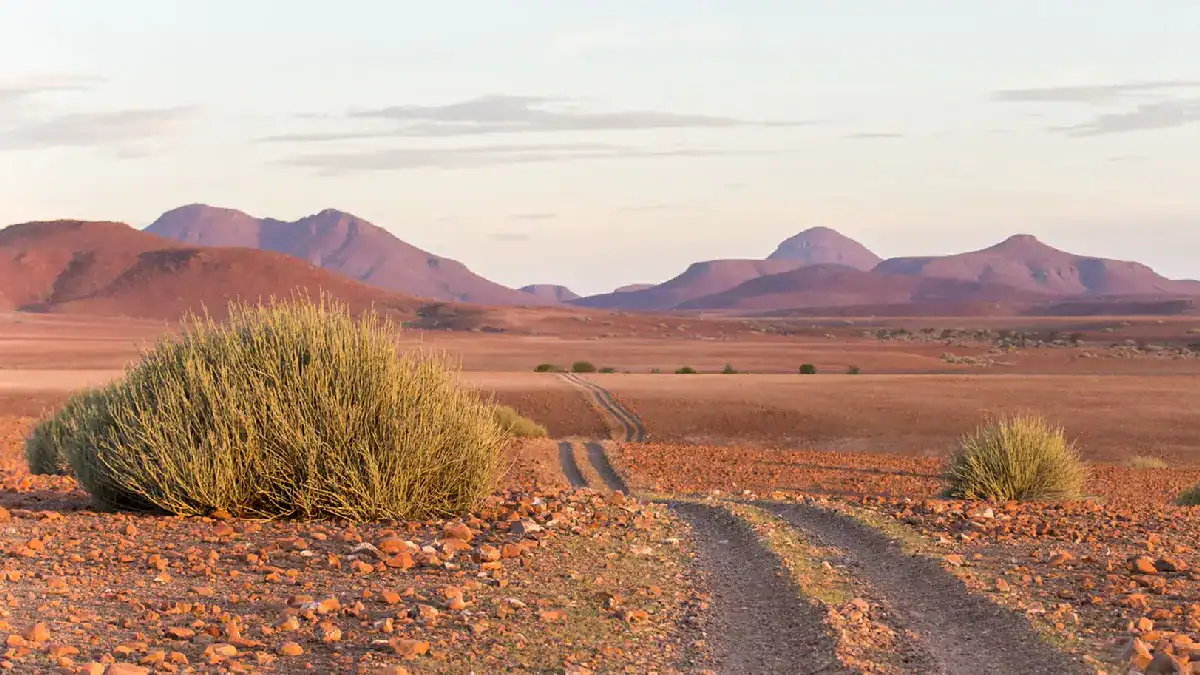
Best for: desert-adapted wildlife, ancient rock art, genuinely remote self-drive routes
Home to the Palmwag Concession, the Twyfelfontein rock engravings, and the Vingerklip rock formation.
Namibia's most in-depth accommodation guide on this site — five distinct sub-areas, each covered in full.
A 4x4 is recommended throughout this region, regardless of area or season.
Most self-drive itineraries spend 2–5 nights here across two or three of the region's sub-areas.
This is Namibia’s most rewarding region for self-drive travellers willing to go further off the beaten track — home to desert-adapted elephant, black rhino tracking in the Palmwag Concession, and some of the continent’s most significant rock art. Because it’s the most built-out region on this site, we’d recommend starting with the dedicated Damaraland guide below rather than this page alone.
Etosha, Waterberg & Northern Namibia
Best for: wildlife viewing, floodlit waterholes, conservation-focused stays
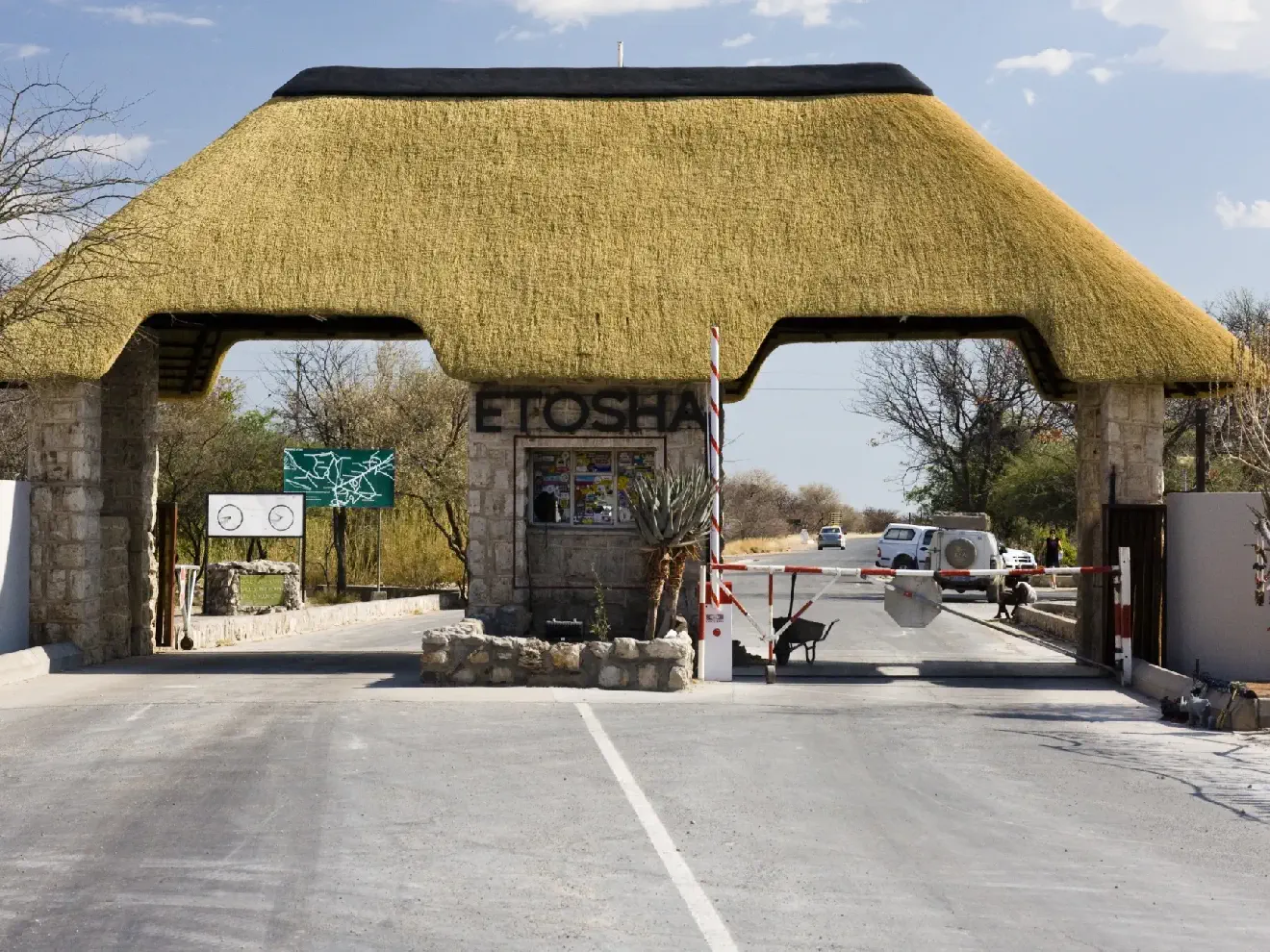
Etosha's in-park camps — Okaukuejo, Halali, Namutoni and others — offer floodlit waterhole viewing after dark, found nowhere else in Namibia.
Choose between staying inside the park gates or just outside — both have real advantages, covered in our dedicated inside and outside guides.
The Waterberg Plateau, just south of the park, offers rhino tracking and conservation stays beyond Etosha itself.
Dry season (June–October) offers the strongest wildlife concentration, as animals gather at limited water sources.
Etosha is Namibia’s flagship wildlife destination, built around a vast salt pan that draws game to a limited number of waterholes — which makes sightings genuinely reliable, particularly in the dry season. The wider region beyond the park boundary, including the Waterberg Plateau, adds further conservation-focused stays without the premium of an in-park camp.
Sossusvlei & the Namib
Best for: iconic dune photography, stargazing, dramatic desert scenery
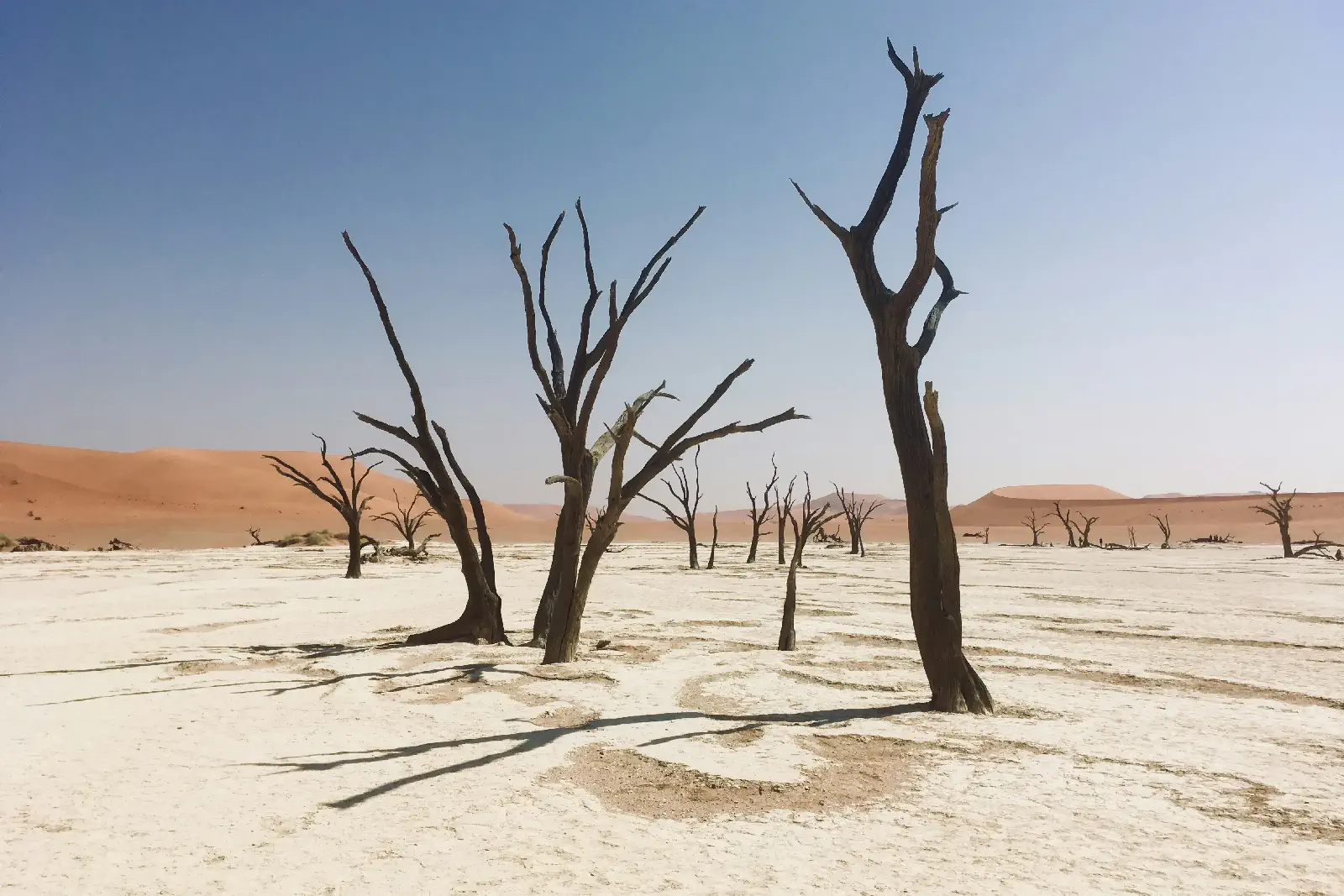
Home to some of the world's tallest sand dunes and the otherworldly white clay pan of Dead Vlei.
Sunrise hot air ballooning over the dune sea is one of Namibia's genuine signature experiences.
Properties cluster around the Sesriem gate — arrive early to beat the heat on dune walks.
A minimum two-night stay is recommended to properly experience both sunrise and sunset light on the dunes.
The dunes here are among the tallest and most photographed in the world, and Dead Vlei — dead camel thorn trees standing in cracked white clay against orange sand — is one of Namibia’s most iconic images. Because the park gate opens at sunrise, where you stay relative to the entrance genuinely affects how much of the best light you get to experience.

Kalahari, Lüderitz & Southern Namibia
Best for: solitude, off-the-beaten-path travel, dramatic empty landscapes
Home to the Kolmanskop ghost town and the dramatic Fish River Canyon.
Namibia's quietest, least-visited region — long driving distances between stops, and worth budgeting extra time for.
Lower accommodation density than other regions — book well ahead, since there are simply fewer properties to choose from.
Best suited to travellers with extra time in their itinerary, rather than a first-time, time-limited visit.
Southern Namibia rewards travellers who have the time to slow down — the red dunes of the Kalahari, the abandoned diamond-mining town of Kolmanskop being slowly reclaimed by sand, and the Fish River Canyon, among the largest canyons in the world. Distances here are longer and accommodation more spread out than elsewhere in the country, which is exactly why it remains the least-visited region.

Kavango & the Zambezi (Caprivi) Region
Best for: fishing, birdwatching, permanent-river landscapes
A genuinely different Namibia — lush and green rather than desert, shaped by permanent rivers rather than dunes.
Boat-based activities — fishing, canoeing, sunset cruises — are the main draw here, rather than self-drive game viewing.
Birdwatching is strongest during the green season (December–March), when migrant species are present.
A natural link if extending a Namibia trip into Botswana, Zambia, or Victoria Falls.
Namibia’s northeastern strip is defined by permanent rivers rather than desert, and feels closer to Botswana’s Okavango Delta than to the rest of the country. It’s less of a standalone destination and more of a natural extension for travellers continuing on toward Victoria Falls or Chobe, with fishing, birding, and boat-based activities the main draw.
Which Region for Which Traveller?
| If you want ... | Best region | Ideal stay length |
|---|---|---|
| Iconic dune photography | Sossusvlei & the Namib | 2 nights |
| Big-game wildlife viewing | Etosha & the North | 2–3 nights |
| Rock art & desert-adapted wildlife | Damaraland & Kunene | 2–5 nights |
| Adventure activities | Swakopmund & the Coast | 2–3 nights |
| Fishing & birdwatching | Kavango & Zambezi | 2–3 nights |
| Solitude & off-the-beaten-path | Kalahari & the South | 3+ nights |
Best Time to Visit Namibia, Region by Region
Etosha & the North:
June–October (dry season) for wildlife concentration around waterholes.
Sossusvlei & the Namib:
Year-round — cooler months (May–September) are more comfortable for dune walks.
Swakopmund & the Coast:
Year-round, though coastal fog is common in the early mornings regardless of season.
Damaraland & Kunene:
Dry season for wildlife tracking; a 4x4 is recommended throughout regardless of season.
Kavango & Zambezi:
December–March (green season) for the strongest birdwatching.
Windhoek & Central:
Year-round — primarily a practical base rather than a seasonal destination.
Frequently Asked Questions
What's the best area to stay in Namibia for a first visit?
Most first-time self-drive itineraries move through four or five regions: Windhoek, Sossusvlei, Swakopmund/the coast, Damaraland, and Etosha. Each offers a genuinely different landscape and experience, which is why most visitors base themselves in more than one region rather than picking just one.
How many nights should I spend in each region?
As a rough guide: 1 night Windhoek (arrival/departure), 2 nights Sossusvlei, 2–3 nights Swakopmund/coast, 2–5 nights Damaraland, 2–3 nights Etosha. Adjust based on how many regions you're covering and your total trip length — most Namibia self-drive itineraries run 10–18 days.
Do I need to book accommodation in advance?
Yes, particularly for July–October (dry season/high season) and for popular parks like Etosha and Sossusvlei, where in-park accommodation is limited and books out months ahead. Shoulder season (May, June, November) offers more flexibility.
Is self-drive the best way to see Namibia, or should I book guided tours?
Both are well-supported. Self-drive is popular and practical thanks to Namibia's well-maintained road network, and it gives you full flexibility over pacing. Guided and fly-in options suit travellers short on time or wanting a more curated, less logistics-heavy trip — many properties, especially in remote regions, offer both road and fly-in access.
What's the difference between a lodge, a camp, and a guest farm?
Broadly: lodges are typically larger, full-service properties with a restaurant and more amenities; camps range from luxury tented camps to simple self-catering campsites; guest farms are working or former farms offering a more personal, small-scale stay, often with their own activities. All three exist across most regions.
Can BookNamibia help me book directly with each property?
Yes — every property listed connects you directly with the establishment. There are no booking fees or commission added on top of the property's own rate.
Do I need a 4x4 for a Namibia self-drive trip?
It depends on your route. Damaraland specifically requires a 4x4 throughout, regardless of season. Sossusvlei, Etosha and the coast are generally accessible by a standard 2WD vehicle with good ground clearance in dry conditions, though a 4x4 is still recommended for a more comfortable, worry-free trip — confirm specific access requirements with each property when booking.
What's the best order to visit Namibia's regions in?
Most self-drive itineraries follow a loop starting and ending in Windhoek: south to Sossusvlei, west to Swakopmund and the coast, north through Damaraland, and on to Etosha before returning to Windhoek. This avoids backtracking and matches the country's road network well. Caprivi/Zambezi is usually added as an extension for travellers with extra time or continuing into Botswana or Zambia.
Is Namibia accommodation expensive?
It varies widely by region and property type — from budget self-catering campsites to some of Africa's most exclusive desert lodges. Sossusvlei and Damaraland tend to have the highest-end options; Windhoek, Swakopmund and the coast offer the widest range of budget to mid-range choices.
Enquire About Namibia Accommodation
Browse properties by region below, or send an enquiry directly to any property — no booking fees, no commission, and your enquiry goes straight to the people who’ll be hosting you.