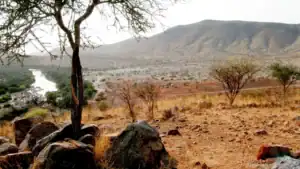
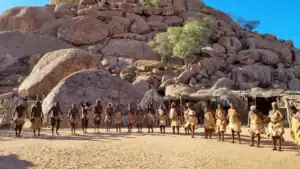
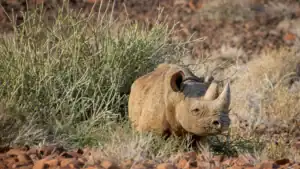
Kaokoland is Namibia’s most remote wilderness region, lying in the far north-west of the country, north of Damaraland and bordered by the Kunene River and Angola. It’s the traditional homeland of the Himba people and home to Epupa Falls, and remains one of the least developed, least visited parts of Namibia. This guide covers what makes Kaokoland different, its main attractions, and how to plan a visit.
What Is Kaokoland?
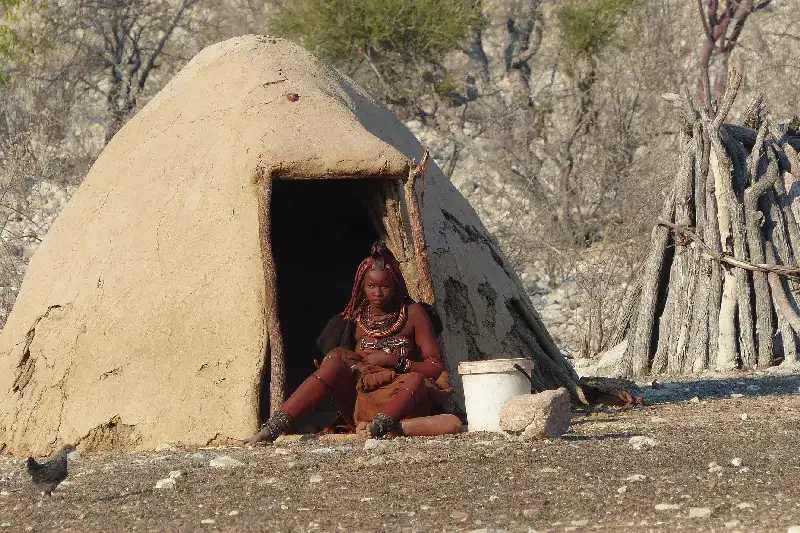
Kaokoland and Damaraland are both part of Namibia’s Kunene Region, but they’re genuinely different places. Damaraland, further south, is the more accessible of the two, built around well-known sites like Twyfelfontein. Kaokoland lies further north again and is significantly more remote, with fewer roads, fewer lodges, and a stronger claim to being true wilderness. It’s the ancestral homeland of the Himba people, whose semi-nomadic way of life is still practised across the region today.
Himba Culture in Kaokoland
Kaokoland is where Himba culture is genuinely rooted, rather than encountered second-hand. Travellers passing through Damaraland sometimes meet Himba individuals selling crafts roadside, a transactional stop rather than a cultural visit, but a guided village visit in Kaokoland itself offers a far more authentic encounter with Himba family life, traditional ceremonies and craft-making. See our full guide to Himba cultural experiences for how to visit respectfully.
Epupa Falls
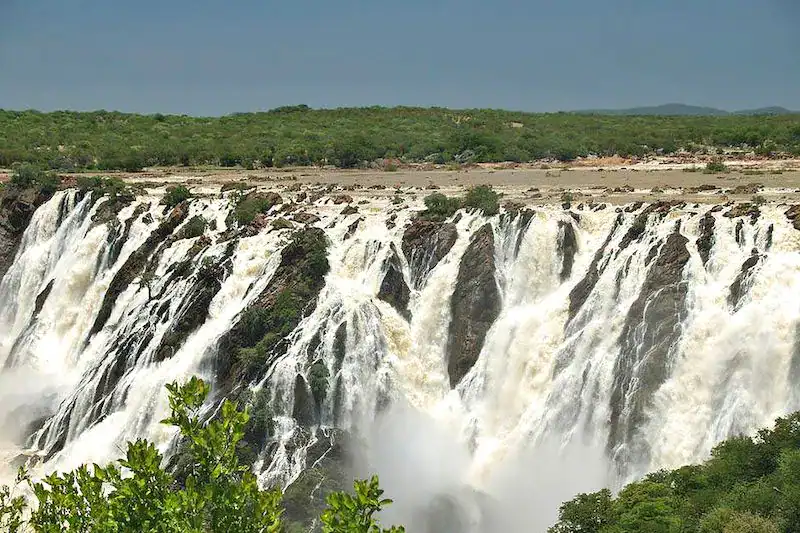
Epupa Falls, a series of cascading waterfalls on the Kunene River, is Kaokoland’s best-known natural landmark and a popular add-on for travellers extending their trip north from Damaraland. The falls mark the border with Angola and sit within reach of Himba communities and strong birdwatching. See our full Epupa Falls guide for what to see and do there.
Other Kaokoland Landmarks
Kaokoland is also home to a handful of other remote landmarks worth a brief mention here. Hartmann’s Valley and the Marienfluss, near the Angolan border, are some of Namibia’s most remote wilderness areas, while Ruacana Falls, on the Kunene River near the town of the same name, is another waterfall in the region. These, along with Van Zyl’s Pass covered below, tend to feature more in specialist fly-in and 4×4 overlanding itineraries.
Desert-Adapted Wildlife
Kaokoland shares the same desert-adapted elephant and lion populations found further south in Damaraland, both surviving on very little water across the region’s dry riverbeds. For the full picture of this wildlife and how sightings are arranged, see our guide to desert elephants in Damaraland.
Getting to Kaokoland and Is a 4×4 Required?
Yes, a 4×4 is essential for Kaokoland. Roads are largely unpaved, often just sand and gravel tracks, and some of the region’s routes, such as the well-known Van Zyl’s Pass, are among the most demanding self-drive terrain in Namibia and not suitable for inexperienced drivers. Many travellers reach the more remote parts of Kaokoland by fly-in safari instead, or as part of a guided Namibian safari with an experienced operator.
If you plan to visit Etosha National Park after Kaokoland, the main routes lead to Kamanjab, the nearest town for fuel and supplies. The Galton Gate, the park’s western entrance, is just north of it on the road from Opuwo. If you are staying at one of the southern lodges in or around Etosha, continue on to Outjo.
Where to Stay
Kaokoland has more dedicated accommodation than you might expect, from gateway lodges on the Damaraland side to remote fly-in camps and self-drive campsites deeper in the region. See our full Kaokoland accommodation guide for where to stay.
Kaokoland vs Damaraland: What’s the Difference
Damaraland and Kaokoland are often bundled together, but they’re distinct regions. Damaraland is the more accessible, better-developed of the two, home to Twyfelfontein and most of the area’s lodges. Kaokoland lies further north, is far more remote, and is the true homeland of the Himba people. For the full picture of Damaraland’s own attractions, see our complete Damaraland guide.