History of Pelican Point
Pelican Point is a narrow peninsula located on the Atlantic coast of Namibia, just outside the town of Walvis Bay. Historically, it has served as a natural sand barrier protecting the Walvis Bay lagoon and harbour of Walvis Bay, making it vital for maritime activities. It’s interesting to note that due mainly to silting, the peninsula has shifted about two kilometres northward into the sea over the last 120 years. The Pelican Point Lighthouse, built in 1932 by the South African government, still stands as an iconic structure at the tip of the peninsula. It has since been renovated into a luxury lodge. Though automated today, the lighthouse once guided sailors navigating the often foggy Namibian coast. Over time, Pelican Point has transformed from a navigational aid into one of the country’s most unique eco-tourism destinations, drawing visitors for its solitude, dramatic coastal landscapes, and abundant wildlife.

Activities at Pelican Point
There are many tourist activities in the surrounding area of Walvis Bay. If you are planning on including Pelican Point in your travel itinerary it is recommended that tourists book an organised tour. Due to the remoteness and thick sand one can easily get stuck in the sand. One of the best ways to experience Pelican Point is by taking a 4×4 excursion or guided tour from Walvis Bay or Swakopmund. Your guide will have a wide knowledge of the area and the wildlife. The journey itself is an adventure — traversing expansive salt flats, wind-sculpted dunes, and the tidal zone where the Atlantic Ocean meets the Namib Desert. The remoteness of Pelican Point is part of its charm, and the landscapes you pass en route are unlike any other.
Many of the activity operators offering Sandwich Harbour tours will include a visit to Pelican Point as it is en route.
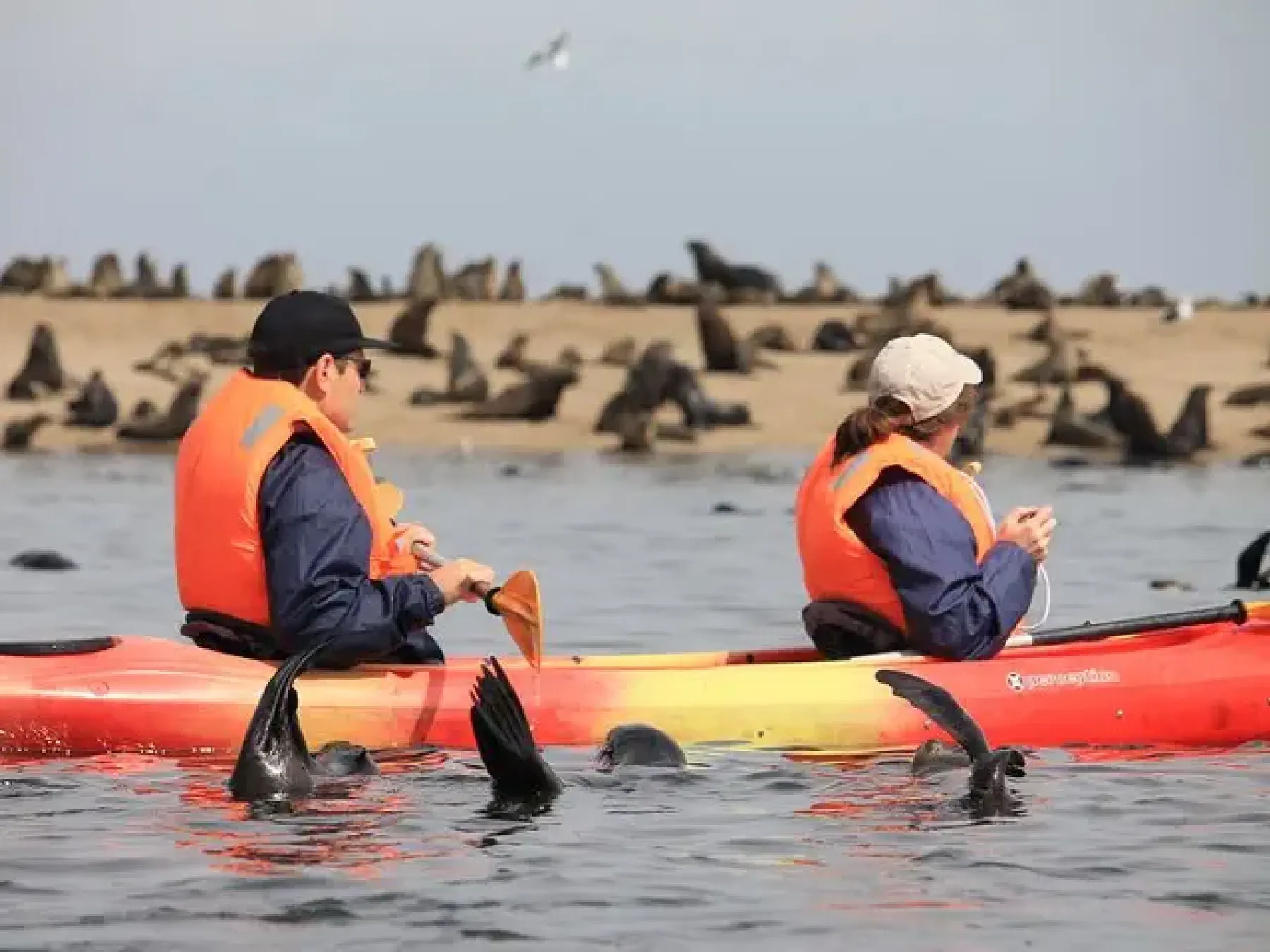
Many visitors opt for guided kayaking tours that launch from the lagoon near Pelican Point. Paddling in the calm waters allows for an up-close look at marine life, especially the local Cape fur seal colony, which is one of the highlights of any visit. These playful seals often swim alongside kayakers, offering an unforgettable wildlife interaction.
Another popular activity is a catamaran or Walvis Bay boat cruise departing from the Walvis Bay Waterfront. These often include sightings of dolphins and seals, and sometimes even sunfish or humpback whales in season (July – November). Birdwatchers will find these tours especially rewarding, as the region is rich in birdlife.
Wildlife and Birdlife at Pelican Point
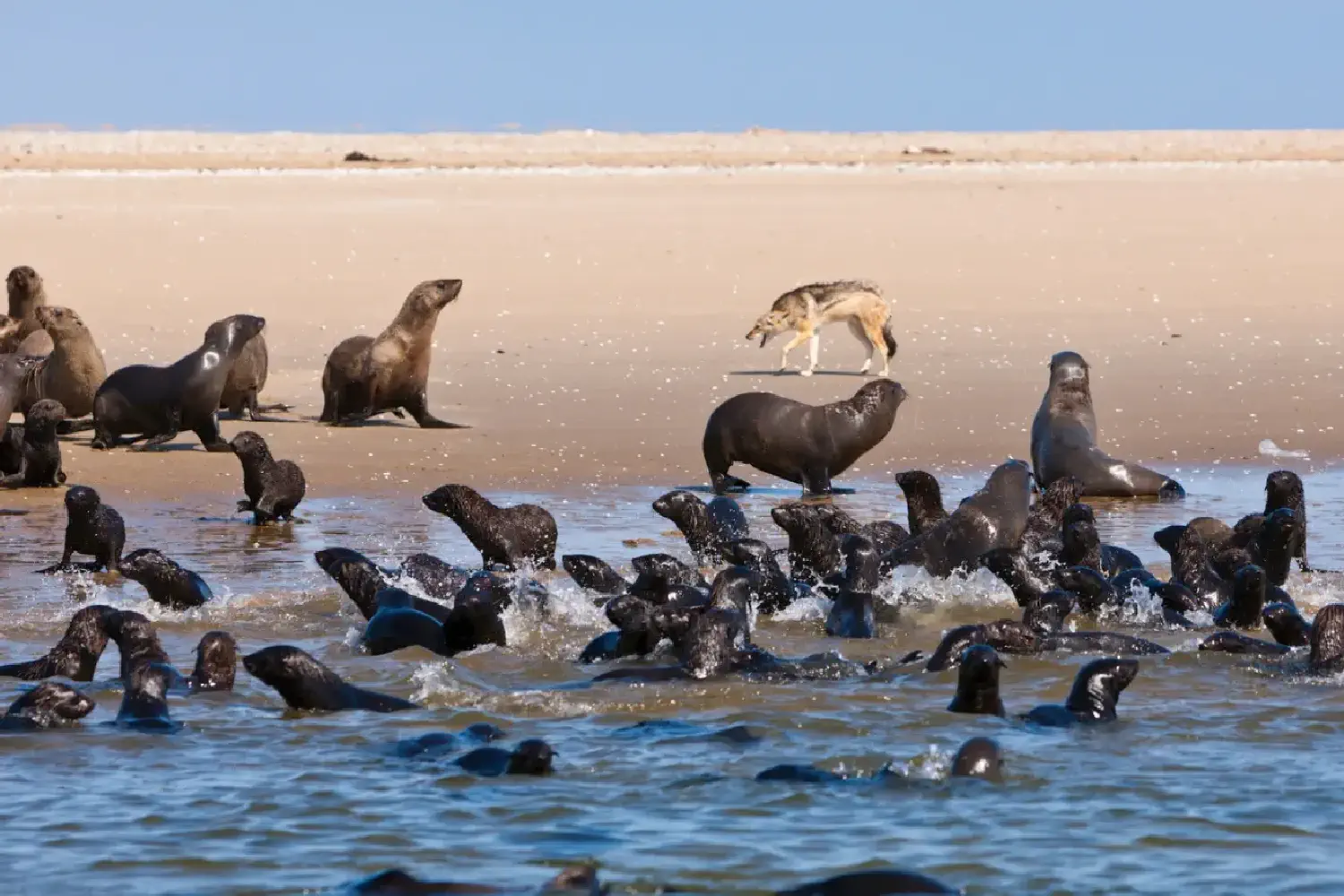
Pelican Point is a sanctuary for wildlife, making it a must-visit for nature lovers. The Cape fur seal colony numbers in the thousands and is active year-round (their numbers are estimated at up to 50000 seals). Seals bask on the sandbanks, frolic in the surf, and sometimes engage in noisy territorial disputes. Dolphins — including Heaviside’s and bottlenose species — are often spotted in the surrounding waters.
Birdlife is another major attraction. As its name suggests, Pelican Point is home to numerous great white pelicans. The Walvis Bay Lagoon, next to the peninsula, is an internationally recognized Ramsar wetland site and supports a diverse range of bird species. Flamingos are one of the most visually striking birds here, both the greater and lesser varieties, often seen wading through the shallows in large groups. Other birds include cormorants, terns, gulls, and even African black oystercatchers. Wildlife is present year-round, but September to March is ideal for birdlife and marine sightings.
In addition to seals and birds, jackals are known to roam the area, scavenging along the beach or resting in the shade of the dunes. While less common, sightings of brown hyenas have been reported by visitors to the area.
 +
+
Other Points of Interest
The Pelican Point Lighthouse is a striking landmark and a photographer’s dream, particularly at sunrise or sunset when the light transforms the surrounding seascape.
Nearby, Walvis Bay itself offers other attractions. The waterfront promenade is perfect for a stroll, and the town provides access to the Namib Naukluft Park, Sandwich Harbour, and Dune 7 — one of the tallest dunes in Namibia. Combining a visit to Pelican Point with other nearby adventures allows travelers to enjoy a well-rounded coastal Namibian experience.
Why Visit Pelican Point?
Pelican Point is not your typical beach destination. It is wild, windswept, and wonderfully isolated. It offers a rare opportunity to connect with nature in one of the most pristine environments on the planet. Whether you’re kayaking among seals, photographing flamingos at dawn, or enjoying a remote luxury stay at the lighthouse, Pelican Point delivers a travel experience unlike any other.
The weather at Pelican Point is often cool, misty, and windy, even in summer. Pack warm layers and windproof clothing.
For tourists visiting Namibia, especially those traveling through Walvis Bay or Swakopmund, Pelican Point is an essential stop that offers a perfect mix of wildlife, scenic beauty, and solitude. It’s a place where the desert meets the sea — and where every moment is framed by nature’s raw and captivating presence.